I love Christmas and New Year. After years of working shifts and therefore having to work at some point over the festive period, I now have the pleasure of having Christmas and New Year as a proper holiday. It hearkens back to my school days when Christmas holidays were second only to eight weeks off in the summer; when all that time off was taken for granted and unappreciated.
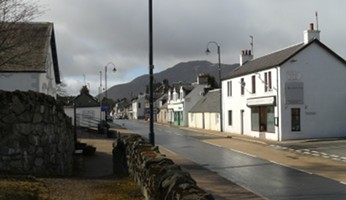
This year it was Steve that had to work at Christmas, so we decided to take a week off at New Year, when he had a few days off, and head north to visit my parents in the chilly Highlands.
It has, of course, been pretty cold everywhere over the last couple of months but up here there isn't as much snow as there is ice and it was the ice on which Mum came a cropper. Having awoken in the early hours, and having watched BBC Stargazing Live on Monday night, Mum went outside in the middle of the night for a cigarette and was looking up instead of where she was putting her feet. Unfortunately she found a patch of the remaining slippery-stuff and ended up flat on her back with a fractured leg.
A phone call to 999 at 3am and a short wait later and the ambulance crew was on site. George and Gail were superb. They were efficient and sensitive. The immediate care Mum received was excellent. Dad and I followed the ambulance up to Inverness. We arrived in a busy Emergency Department at Raigmore hospital and settled in for a long wait to hear anything. However, despite being clearly very busy, the nursing staff were excellent. They allowed us to join Mum very quickly and kept us informed throughout the wait. They were efficient, promptly sending Mum for an x-ray so that she could be properly assessed as soon as the doctor was available. It was a long wait but I was impressed by the emergency care that Mum received. The staff made her comfortable and they were very attentive. The second visit to the hospital to have the temporary heavy cast removed and replaced with the permanent light-weight cast was equally well handled. The doctor was lovely and the nursing staff in the plaster room were also fanstastic. I was surprised how quickly we were in and out and read rather less of my book than I expected!
This is the first time I have really appreciated the sharp end of British healthcare and I cannot fault the Ambulance Service or the various people - paramedics, doctors and nurses - that have looked after Mum during the last few days. They have all been very understanding, sensitive, attentive and have delivered the highest standard of care I could hope for. How disappointing then when Mum got a call from a GP this morning to be told "a broken leg is not a reason for a medical certificate"!
I can appreciate that there are situations in which people can continue to work with a broken leg. Although I would probably struggle to get to work with a broken leg, I would be able to work from home and, on days when I did have suitable transport, I'd also be able to work in the office: I have a desk-job and my office has disabled access, including a lift. However, Mum is an Community Care worker. Her job entails assessing clients' needs and delivering and installing equipment to help them at home. The community that she covers stretches from Dalwhinnie in the South as far as Nairn in the North. This is an area approximately 65 miles in length. She spends much of her time on the road, traveling between clients and needs to be able to carry and install, often bulky, equipment. Additionally, she is not even be able to go into her office just to sit at her desk as it is up a flight of stairs with no lift. There is simply no way that she can work with a plaster cast from her knee to her toes.
Despite explaining this to the doctor on the phone, the doctor insisted that Mum cannot have a medical certificate. It is clear to me that this is a case of a doctor who thinks they know better than the patient. I'm sure this doctor has had many cases where an otherwise fit and healthy individual, who is perfectly capable of working comes begging for a medical certificate for a broken leg, so perhaps I shouldn't be shocked or disappointed. Perhaps this doctor delivers otherwise excellent medical care and advice. I don't know as I have never met her. Worryingly, neither has my Mum! Either way, what horrifies me is not necessarily the initial judgement, it's the fact that she refused to listen to reason. She completely ignored Mum's protestations and didn't even entertain the possibility of carrying out any further investigations. I wonder if she even considered that Mum is 64 years old and it is difficult enough for her to get along at home let alone at work. to me, this represents everything that is wrong with British healthcare. What a shame that it comes on the back of an experience that represents everything that is right with it.
I truly troubles me that while hospital care seems to have maintained a relatively good standard of patient service, GP care has waned. I know of so many instances where people I know, friends and family etc., have received a poor service from a GP. The days when your GP knew you and your medical history intimately, when you trusted his or her judgment and they understood you are long gone. Huge medical practices deal with huge areas and masses of patients. It is often difficult to get an appointment and even when you do there is often an impression that they can't get you out of the door quick enough. There has been so much focus on hospital care, waiting lists and MRSA that I wonder if everyday care has been forgotten in the shuffle, leaving GPs feeling pressured and dumped-on. I believe that it is high-time that this was investigated and action taken to address these problems.
Friday, 7 January 2011
Thursday, 9 December 2010
A Fee Too Far?
![]() |
| Students protest in London (BBC News) |
Under the new scheme, the cap on tuition fees would be increased to £9,000 per year (up from around £3,200). This is to offset changes under the deficit reduction plan that will see cuts of at least 40% to university funding. Essentially, the weight of responsibility for university funding will be shifted from the taxpayer to the graduate. While this might seem frightening (particularly when you consider a typical degree will take three years, incurring up to £27,000 of debt for the graduate before they have even taken a job), plans have been put in place to try and alleviate the burden. First and foremost, under the proposed scheme, students will not have to pay anything up front, thereby maintaining the accessibility of university education. Secondly, no graduate will pay a penny until they are earning £21,000 per annum (with this threshold increasing annually according to the rate of inflation). Once graduates do start paying back their fees, they will pay only 9% per month. While this might seem alot, it ensures that higher earners will pay more back, and will pay more quickly than those on lower incomes. Finally, the debt will be written off after 30 years so no-one will be lumbered with the burden indefinitely.
Happily, having never made any election promise pertaining to tutition fees, I feel secure in stating for posterity that I am in favour of the new proposals and that, if I were an MP today, I would vote accordingly. While I baulk at the thought of students accumulating debt to the tune of almost thirty grand, I acknowledge that present circumstances prohibit even the status quo, never mind abolishing fees altogether. Present circumstances include the fact that we are in coalition and must compromise with our Conservative colleagues, allowing them to meet some of their election pledges at the same time as meeting some of our own. We have, and will continue to achieve some of our manifesto policies, but abolishing tuition fees was never going to be possible in a coalition, either with the Conservatives or with Labour. Furthermore, the previous government has left the country with a much greater deficit than even the most pessimistic estimates predicted. As a result, cuts have had to be deeper and more immediate than we believed was the case during the election period. (Welcome to the world of Labour lies.) Either way, the simple truth at the end of the day is that there are more important spending priorities, including health and schools, than ensuring a free university education for anyone that wants it. I would, of course, prefer not to increase tuition fees at all and would love to be in a position to guarantee free higher education to all but, facing budget cuts, universities have to be allowed to charge students higher fees. If they are not allowed to do so, it will not be a reduced uptake for students from poorer backgrounds that we face, or a generation of students in a debt crisis; it will be a generation of students fighting for a greatly reduced number of university places and this benefits no-one.
In addition, there is the greater debate of whether it is right for the taxpayer to fully fund higher education. I have found very few people that believe the taxpayer should shoulder the burden alone, but most of the people I have discussed it with are cautious about increasing fees to the proposed £9k. It seems therefore that the problem is not the fees themselves but the number. £9,000 is still a lot of money to most people, especially multiplied three times. Generally, however, I have found a lot of support for the new proposals, especially when people come to understand that those who earn less will pay less. Most people seem convinced that higher education should not be pervue of the taxpayer.
This debate fundamentally differs in England than in Scotland where there is a cultural tradition of free education. I know my Dad is very much against tuition fees, but I haven't discussed with enough Scots to get a reasonable grasp of public feeling north of the border.
Either way, the choice in government today is simple: increase the cap on tuition fees and ensure funding security for universities, or maintain the status quo on tuition fees and doom thousands of youngsters to a future where there is no university place for them at all. There is no question of whether we should abolish tuition fees or not, because it is not achievable in coalition. Faced with these choices, I believe the proposals are progressive and I therefore support them. I believe that students will be better off in the long-run and that the policy has greatly benefitted from the influence of the Liberal Democrats in government. Without this influence, the cap would probably have been lifted altogether and I doubt that any of the measures to ensure accessibility for students from poorer backgrounds would have been part of the policy.
Of course, if I were an MP today, I may well have got there by signing a pledge or campaigning on the principle of abolishing tuition fees, in which case my views are quite different. For those who have made promises, particularly by signing pledges, the situation is very much more complex. It is clear that some MPs will feel bound to vote against the proposals, regardless of any merits. I personally feel that an MP's duty is first, to their constituents and second to the government as a whole. MP's are there to represent the people that elected them so if a candidate stated that they would oppose any increase in tuition fees, in simple terms, they risk betraying their electorate if they vote in favour of the proposals. There is a question about whether this individual policy was crucial in each individual campaign and how many constituents realistically support the abolition of tuition fees, as politics is anything but simple, so it will therefore be a matter of conscience for some Liberal Democrat MPs and I leave it to them to determine how best to represent their constituency. However, I would personally discourage abstention as 'the cowards way out'.
My final concern is how the Liberal Democrat party will be perceived after this crucial vote. In coalition with the Conservatives, I always feared that we would come off worse. It is harder for our credibility to survive compromise with the defense "it would've been worse without us" than it is for the Conservatives, who will convince right wing supporters that their more moderate policies are all our doing. I would like to think that four years down the line people will be better off and recognise our influence in bringing that prosperity. It is particularly difficult to think positively in a firestorm of negative media coverage and also difficult to think positively when the future of the nation is hurling missiles and injuring police in violent protests. How representative of voter feeling these protests are remains to be seen. After all, Labour promised not to introduce tuition fees and did, and pledged not to increase them and did, and they survived in government for over a decade. I think as long as we can maintain our identity as Liberal Democrats and ride out media interest without being seen to be weak, we will get-by.
Tuesday, 12 October 2010
Rural Unemployment
I worked from home today so I had the pleasure of the BBC News channel this morning while I was logging on. There were several interesting reports - student fees and benefits were the hot news of the morning - but the one that really caught my attention was a report that said unemployment in rural areas was lower by percentage than in urban areas. The BBC went on to report about two young people from rural communities, one apprenticing as a butcher and a young woman learning a trade as a stone mason. It was a very interesting report but sadly, very poorly reported and sorely under-researched.
I spent my adolescence in a rural Scottish community so I know too well the choices and issues that people living in rural communities face. I therefore wasn't surprised by the statistic and can immediately think of some reasons for it that the BBC didn't even mention.
Firstly, populations in rural communities tend to be quite static, occasionally increasing or declining, but not usually by too much. Planning constraints and green belt often limit the number of homes that can be built which limits the potential for growth. This in turn has the additional effect of inflating house prices as demand (by wealthy investors looking for holiday homes or second homes) outstrips supply.
Employment and education also tend to control the population. Back when I was approaching the end of my school days, if you were good at exams, you were encouraged to go to university (if you weren't the careers advisors made other suggestions, including the armed forces, college in Inverness 40 miles away, apprenticeships or work.) and going to university meant moving out and moving away. Dundee is the nearest city to Strathspey, where I grew up, and is around 90 miles distant; Aberdeen and Edinburgh are just over 100 miles away and Glasgow is about 125 miles away. As a school leaver in the Highlands with decent exam results, moving away was a virtual certainty. However, because of the type of employment available in the area, staying away was an almost equal certainty.
While there are plenty of employment opportunities in rural communities, they can also be quite limited and often unstable and this keeps young people away. In Strathspey, many of the employment opportunities are based on the tourist industry, which is highly seasonal and horribly unstable. There are plenty of positions in hotels and bars, in retail and in sports and leisure but this type of work is notorious for being there one minute and gone the next. Tourism is dependent upon so many factors: Lots of cheap overseas deals is death to the British tourism industry; something like a Foot and Mouth outbreak keeps visitors away in their droves; even the wrong sort of weather (a warm winter or a wet summer) might result in a massive drop in visitor numbers and global terrorism keeps foreign visitors away too. It's also ironic that the recession is doing wonders for our tourist industry: When the nation is prosperous, British tourism suffers as people are able to spend more money on overseas holidays to exotic destinations. Rural communities do present other opportunities; in farming, land management, environment, education, social care and local government, but such positions are far less abundant
In addition, when you live in the middle of nowhere, the cost of living is also higher. In a city, if you can't get work, you get rid of your car and you shop in Aldi instead of Sainsbury's. When you live in a rural community, you need a car because there is limited or no bus service. (Where I lived, the Doctor was in the next town, 3 miles away, as was my school and the chemist.) In a rural community it also costs more to run your car. In a city you have a choice of any number of petrol stations to fuel up (I have 6 choices within a 5 minute drive of my house or place of work) but in a rural community, there might only be one within a 30 minutes drive. A captive audience means a higher price. And forget going to Aldi for your shopping; if you're lucky you might have a supermarket in your town, but you might equally be reliant on a supermarket quite some distance away, or on smaller shops with higher prices.
Don't get me wrong, rural life is wonderful. Living in a rural community is an enriching experience and if I felt it was a viable option, I would have moved back years ago. The air is cleaner, locally produced food is better, the pace of life is more relaxed and the view is magnificent, but make no mistake, rural life is also bloody hard. For more than a decade I watched my parents working hard to make their business - a gift shop and cafe - work through years of tough conditions. It was graft. Every single day. And decisions had to be made with the business and their survival in mind. (I got married in September because that was the best month dictated by the requirements of the business.) It doesn't surprise me that unemployment is higher in the urban areas than in rural communities because, in a rural community, if you lose your job or it disappears because of a bad season, the choice is to get something else, quickly, or leave for a place with more opportunities. When you also consider that young people, who tend to move away from rural communities to take up study after school, are the worst affected by unemployment, and the statistics mentioned by the BBC begin to make more and more sense.
![]() |
Firstly, populations in rural communities tend to be quite static, occasionally increasing or declining, but not usually by too much. Planning constraints and green belt often limit the number of homes that can be built which limits the potential for growth. This in turn has the additional effect of inflating house prices as demand (by wealthy investors looking for holiday homes or second homes) outstrips supply.
Employment and education also tend to control the population. Back when I was approaching the end of my school days, if you were good at exams, you were encouraged to go to university (if you weren't the careers advisors made other suggestions, including the armed forces, college in Inverness 40 miles away, apprenticeships or work.) and going to university meant moving out and moving away. Dundee is the nearest city to Strathspey, where I grew up, and is around 90 miles distant; Aberdeen and Edinburgh are just over 100 miles away and Glasgow is about 125 miles away. As a school leaver in the Highlands with decent exam results, moving away was a virtual certainty. However, because of the type of employment available in the area, staying away was an almost equal certainty.
While there are plenty of employment opportunities in rural communities, they can also be quite limited and often unstable and this keeps young people away. In Strathspey, many of the employment opportunities are based on the tourist industry, which is highly seasonal and horribly unstable. There are plenty of positions in hotels and bars, in retail and in sports and leisure but this type of work is notorious for being there one minute and gone the next. Tourism is dependent upon so many factors: Lots of cheap overseas deals is death to the British tourism industry; something like a Foot and Mouth outbreak keeps visitors away in their droves; even the wrong sort of weather (a warm winter or a wet summer) might result in a massive drop in visitor numbers and global terrorism keeps foreign visitors away too. It's also ironic that the recession is doing wonders for our tourist industry: When the nation is prosperous, British tourism suffers as people are able to spend more money on overseas holidays to exotic destinations. Rural communities do present other opportunities; in farming, land management, environment, education, social care and local government, but such positions are far less abundant
In addition, when you live in the middle of nowhere, the cost of living is also higher. In a city, if you can't get work, you get rid of your car and you shop in Aldi instead of Sainsbury's. When you live in a rural community, you need a car because there is limited or no bus service. (Where I lived, the Doctor was in the next town, 3 miles away, as was my school and the chemist.) In a rural community it also costs more to run your car. In a city you have a choice of any number of petrol stations to fuel up (I have 6 choices within a 5 minute drive of my house or place of work) but in a rural community, there might only be one within a 30 minutes drive. A captive audience means a higher price. And forget going to Aldi for your shopping; if you're lucky you might have a supermarket in your town, but you might equally be reliant on a supermarket quite some distance away, or on smaller shops with higher prices.
Don't get me wrong, rural life is wonderful. Living in a rural community is an enriching experience and if I felt it was a viable option, I would have moved back years ago. The air is cleaner, locally produced food is better, the pace of life is more relaxed and the view is magnificent, but make no mistake, rural life is also bloody hard. For more than a decade I watched my parents working hard to make their business - a gift shop and cafe - work through years of tough conditions. It was graft. Every single day. And decisions had to be made with the business and their survival in mind. (I got married in September because that was the best month dictated by the requirements of the business.) It doesn't surprise me that unemployment is higher in the urban areas than in rural communities because, in a rural community, if you lose your job or it disappears because of a bad season, the choice is to get something else, quickly, or leave for a place with more opportunities. When you also consider that young people, who tend to move away from rural communities to take up study after school, are the worst affected by unemployment, and the statistics mentioned by the BBC begin to make more and more sense.
Subscribe to:
Posts (Atom)