I worked from home today so I had the pleasure of the BBC News channel this morning while I was logging on. There were several interesting reports - student fees and benefits were the hot news of the morning - but the one that really caught my attention was a report that said unemployment in rural areas was lower by percentage than in urban areas. The BBC went on to report about two young people from rural communities, one apprenticing as a butcher and a young woman learning a trade as a stone mason. It was a very interesting report but sadly, very poorly reported and sorely under-researched.
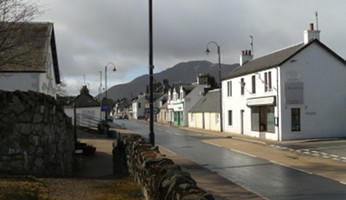
I spent my adolescence in a rural Scottish community so I know too well the choices and issues that people living in rural communities face. I therefore wasn't surprised by the statistic and can immediately think of some reasons for it that the BBC didn't even mention.
Firstly, populations in rural communities tend to be quite static, occasionally increasing or declining, but not usually by too much. Planning constraints and green belt often limit the number of homes that can be built which limits the potential for growth. This in turn has the additional effect of inflating house prices as demand (by wealthy investors looking for holiday homes or second homes) outstrips supply.
Employment and education also tend to control the population. Back when I was approaching the end of my school days, if you were good at exams, you were encouraged to go to university (if you weren't the careers advisors made other suggestions, including the armed forces, college in Inverness 40 miles away, apprenticeships or work.) and going to university meant moving out and moving away. Dundee is the nearest city to Strathspey, where I grew up, and is around 90 miles distant; Aberdeen and Edinburgh are just over 100 miles away and Glasgow is about 125 miles away. As a school leaver in the Highlands with decent exam results, moving away was a virtual certainty. However, because of the type of employment available in the area, staying away was an almost equal certainty.
While there are plenty of employment opportunities in rural communities, they can also be quite limited and often unstable and this keeps young people away. In Strathspey, many of the employment opportunities are based on the tourist industry, which is highly seasonal and horribly unstable. There are plenty of positions in hotels and bars, in retail and in sports and leisure but this type of work is notorious for being there one minute and gone the next. Tourism is dependent upon so many factors: Lots of cheap overseas deals is death to the British tourism industry; something like a Foot and Mouth outbreak keeps visitors away in their droves; even the wrong sort of weather (a warm winter or a wet summer) might result in a massive drop in visitor numbers and global terrorism keeps foreign visitors away too. It's also ironic that the recession is doing wonders for our tourist industry: When the nation is prosperous, British tourism suffers as people are able to spend more money on overseas holidays to exotic destinations. Rural communities do present other opportunities; in farming, land management, environment, education, social care and local government, but such positions are far less abundant
In addition, when you live in the middle of nowhere, the cost of living is also higher. In a city, if you can't get work, you get rid of your car and you shop in Aldi instead of Sainsbury's. When you live in a rural community, you need a car because there is limited or no bus service. (Where I lived, the Doctor was in the next town, 3 miles away, as was my school and the chemist.) In a rural community it also costs more to run your car. In a city you have a choice of any number of petrol stations to fuel up (I have 6 choices within a 5 minute drive of my house or place of work) but in a rural community, there might only be one within a 30 minutes drive. A captive audience means a higher price. And forget going to Aldi for your shopping; if you're lucky you might have a supermarket in your town, but you might equally be reliant on a supermarket quite some distance away, or on smaller shops with higher prices.
Don't get me wrong, rural life is wonderful. Living in a rural community is an enriching experience and if I felt it was a viable option, I would have moved back years ago. The air is cleaner, locally produced food is better, the pace of life is more relaxed and the view is magnificent, but make no mistake, rural life is also bloody hard. For more than a decade I watched my parents working hard to make their business - a gift shop and cafe - work through years of tough conditions. It was graft. Every single day. And decisions had to be made with the business and their survival in mind. (I got married in September because that was the best month dictated by the requirements of the business.) It doesn't surprise me that unemployment is higher in the urban areas than in rural communities because, in a rural community, if you lose your job or it disappears because of a bad season, the choice is to get something else, quickly, or leave for a place with more opportunities. When you also consider that young people, who tend to move away from rural communities to take up study after school, are the worst affected by unemployment, and the statistics mentioned by the BBC begin to make more and more sense.